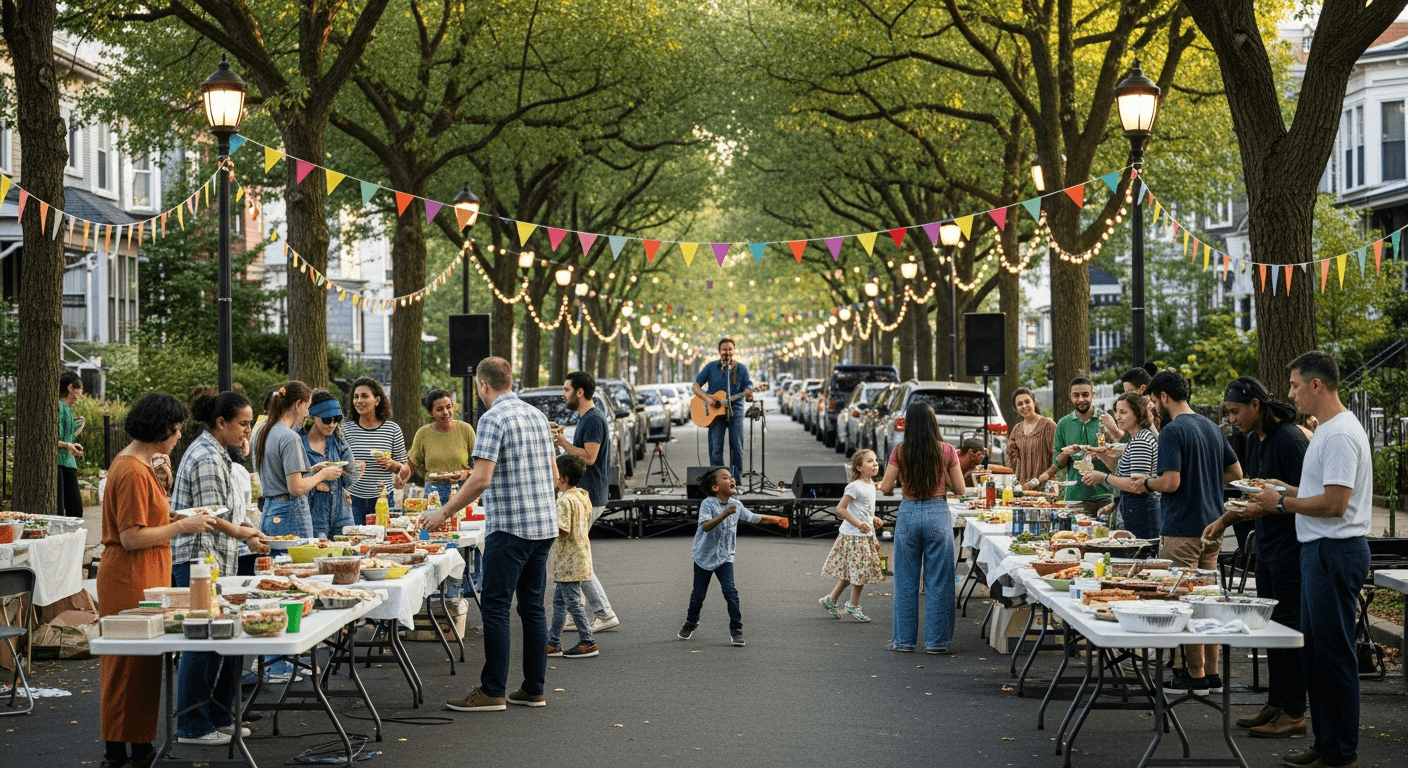
The Neighborhood Event That Needs Funding
You want to throw a block party. Or organize a community garden. Or host a neighborhood movie night. The idea has support—people love community events. But between the permits, equipment rentals, food, and decorations, even a simple neighborhood gathering costs real money.
The traditional approach involves someone going door-to-door collecting cash or posting in the neighborhood Facebook group asking people to Venmo them directly. It's personal—which is nice—but it's also inefficient, unaccountable, and makes the organizer the central bank for the entire neighborhood.
When you're asking 50 households to contribute $20 each, you need a system that's transparent, easy, and trustworthy. People are more willing to give money to a clear fund with visible progress than to an individual's personal payment account.
Why Traditional Community Fundraising Falls Short
GoFundMe and similar platforms work well for personal causes, but they feel wrong for community events. The fees eat into small budgets. The platform is designed for charitable giving, not neighborhood cost-sharing. And there's always someone who distrusts where the money is going when it sits in someone's personal crowdfunding account.
Cash collections have their own problems. Money gets lost or miscounted. There's no record of who contributed. The person holding the cash is personally responsible for it. And in an era where fewer people carry cash, you're limiting participation.
What community events need is a purpose-built pooling system where the total goal is clear, contributions are tracked, and everyone can see the progress. That's community funding done right.
Setting Up a Community Pool
Create a pool on Pooled with the event name and total budget. Be specific about costs: "Annual Block Party - Elm Street. Permits: $150. Bounce house rental: $300. Food (burgers, hot dogs, sides): $400. Music/DJ: $200. Decorations: $100. Total: $1,150. That's $23 per household for our 50-house block."
Share the link through neighborhood channels—the HOA email list, the Nextdoor group, printed flyers in mailboxes, or the neighborhood WhatsApp chat. The more channels you use, the more households you reach.
Set a realistic deadline and let people contribute at their own pace. Some will pay the day they see the link. Others will contribute the week before the deadline. The pool's progress bar creates natural momentum—as people see it filling up, they're motivated to be part of it.
Building Trust Through Transparency
The number one barrier to community fundraising is trust. People want to know that their $20 is actually going toward the event and not disappearing into someone's personal expenses. This suspicion isn't personal—it's human nature.
Pooled addresses this head-on. Every contribution is recorded. The total is visible to all contributors. The budget breakdown is in the pool description. When the event happens and people see the bounce house, eat the food, and enjoy the music, they can connect their contribution directly to the outcome.
This transparency also makes future events easier to fund. When a community sees that the money was handled responsibly the first time, they're much more willing to contribute the next time. Trust compounds, and so does community participation.
Rallying Participation
Not every household will contribute, and that's okay. In most neighborhoods, if you can get 60-70% participation, you've done well. The key is making it easy and removing barriers.
Share updates as the pool progresses: "We're 60% funded! Only 15 more households needed to make this block party happen." This creates urgency and community spirit. People don't want to be the reason the event doesn't happen.
Consider tiered contributions for bigger events. "$20 gets you in. $50 sponsors a family who can't contribute. $100 gets your business name on the event banner." Giving people options beyond the base amount can help you exceed your goal and create a more inclusive event.
Beyond the Block Party
Community pooling works for far more than parties. Neighborhood watch equipment, shared garden supplies, park bench donations, street beautification projects, holiday decorations—any community initiative that benefits everyone and costs money is a candidate for a Pooled pool.
Some neighborhoods create ongoing community funds that cover recurring shared costs. Monthly contributions of $10-$15 per household can build a budget that funds seasonal events, maintains shared spaces, and handles unexpected community needs.
The tool is the same. The trust-building effect is the same. And the result is the same: a stronger community that invests in itself, together.
Stronger Neighborhoods Start with Shared Investment
The best neighborhoods aren't the ones with the nicest houses. They're the ones where people know each other, look out for each other, and come together for shared experiences. Community events build those connections—but only if someone can organize the funding without it being a nightmare.
Pooled turns community funding from a painful chore into a simple share. One link. Full transparency. Fair contributions. And a block party that the whole neighborhood will remember.
Because the goal isn't just the event. The goal is the community that the event strengthens. And that starts with everyone chipping in, together.